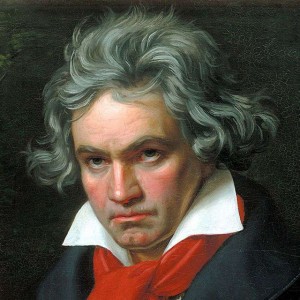
Ludwig van Beethoven, born in Bonn around December 16, 1770, was a German composer known for pushing musical boundaries and creating powerful compositions. He received early training from local musicians and later studied with notable figures like Haydn, Albrechtsberger, and Salieri. Beethoven's career began in 1794 as a pianist and composer, leading to groundbreaking works like the Symphony No. 3, "Eroica," in 1803. Despite personal struggles, including deafness and failed romances, Beethoven's late works, such as his string quartets and piano sonatas, are revered for their mystical quality. He passed away in Vienna on March 26, 1827.
Beethoven's career is often divided into early, middle, and late periods, showcasing his evolution from Classic-period influences to a unique musical language. His compositions profoundly influenced the 19th-century music landscape, with works like the "Waldstein" and "Appassionata" sonatas expanding the piano sonata genre. Beethoven's impact extended to song cycles and symphonies, laying the groundwork for Romantic composers like Schubert and Wolf. His music inspired both conservative and radical composers, with his humanistic and dramatic style remaining universally appealing. Beethoven's legacy as a revolutionary figure in music endures through his innovative compositions and enduring influence.